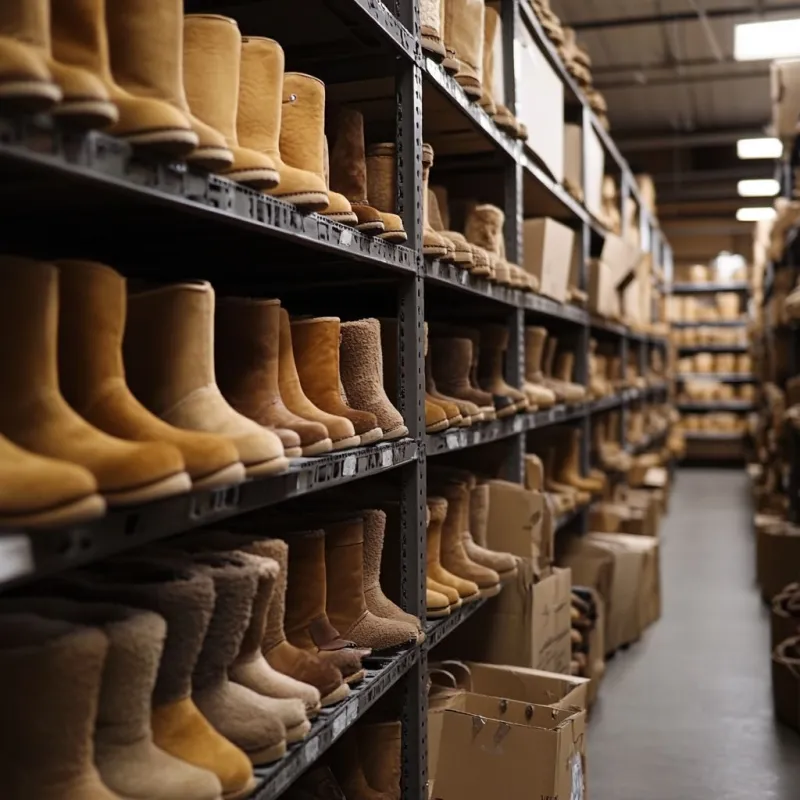
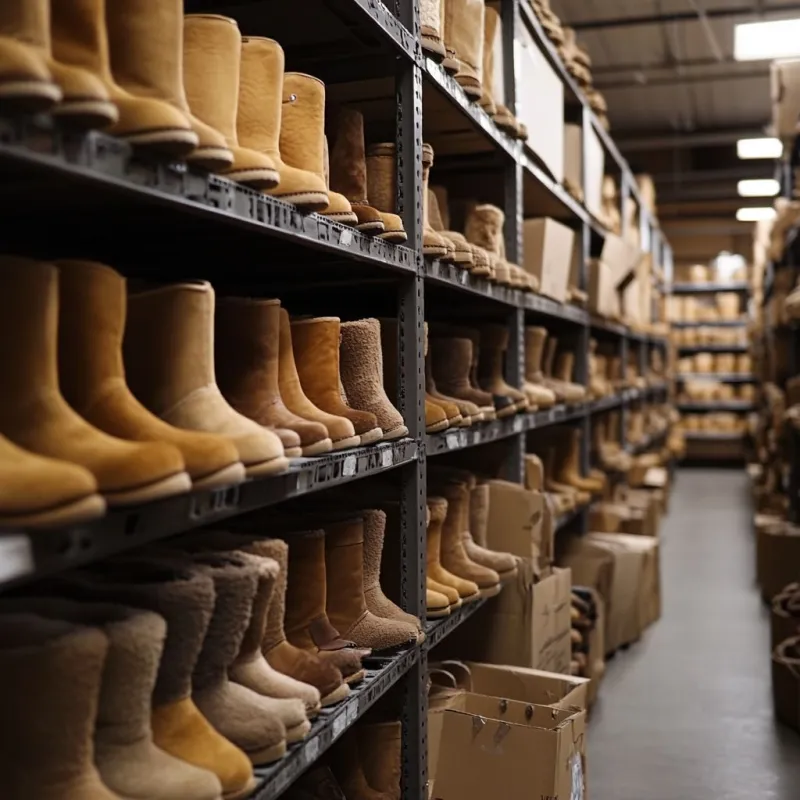
Follow the Boot: What Really Happens to Unsold Uggs After the Season Ends
Photo: Unknown authorUnknown author or not provided, Public domain, via Wikimedia Commons
Every year, millions of pairs of winter boots get made. Not all of them sell. So where do they go?
If you've ever wondered why certain Ugg styles suddenly disappear from the main website, or how outlet stores manage to sell what looks like the same boot for $60 less, or why you can sometimes find brand-new pairs on resale platforms at prices that seem almost too good — this article is for you. The footwear supply chain is more interesting than it sounds, and for bargain hunters, understanding it is genuinely useful.
How Ugg Plans Its Inventory (And Why It's Never Perfect)
Large footwear brands like Ugg operate on a production calendar that runs way ahead of the actual retail season. By the time boots hit store shelves in September, those styles were finalized, manufactured, and shipped months earlier — sometimes closer to spring or early summer.
Brands have to forecast demand before they actually know what demand will be. They use historical sales data, trend analysis, and retailer pre-orders to guess how many units of each style to produce. Sometimes they guess right. Often they don't.
A warm fall, a slow retail season, or a style that just doesn't connect with shoppers can leave a brand sitting on thousands of unsold pairs. That inventory has to go somewhere — and where it goes depends on how much of it there is and how urgently it needs to move.
The First Stop: Department Store Clearance
The most visible first step in the markdown journey is right at the retail level. When a department store like Nordstrom or Macy's has Ugg inventory that didn't sell at full price, they discount it. End-of-season sales, Black Friday events, and post-holiday clearance are all part of this process.
For shoppers, this is actually one of the best times to buy. The styles are current, the selection is still decent, and the discounts can be significant — sometimes 30 to 50 percent off retail. The catch is timing. Wait too long, and your size is gone. Move too early, and the price hasn't dropped far enough yet.
The sweet spot for department store clearance on winter boots is typically late January through February. The season is winding down, stores want the floor space, and markdowns are at their deepest.
What Retailers Send Back — And What Brands Do With It
Retailers and brands often have agreements that allow stores to return unsold inventory at the end of the season rather than taking a total loss on it. This returned stock flows back into the brand's distribution system and gets sorted for its next destination.
Some of it goes to the brand's own outlet stores. Some gets sold in bulk to third-party liquidators. Some is repurposed for international markets where the style might still be in demand. And occasionally, a very small amount gets destroyed — though brands try hard to avoid this because it's expensive and increasingly bad PR.
The path a specific pair takes depends on its condition, the quantity available, and the brand's current outlet strategy.
Outlet Stores: Not Always What You Think
Here's something worth knowing: not everything sold in an outlet store is a returned or unsold retail item. Many large brands — including major footwear companies — manufacture products specifically for their outlet locations. These "made for outlet" products are built to a slightly different spec than the full-price retail version, allowing the brand to hit lower price points without cannibalizing their mainline business.
This isn't necessarily a scam — the boots can still be quality products — but it does mean that an "outlet Ugg" might not be identical to the same style sold at full price in a department store. The materials, stitching, or hardware might differ in subtle ways.
That said, genuine overstock and last-season styles absolutely do end up in outlets too. The trick is knowing the difference, which isn't always easy without examining the product closely.
When Styles Get Discontinued
Sometimes a style doesn't just go on sale — it disappears entirely. Discontinued styles can exit the market for several reasons: the silhouette fell out of trend, the manufacturer had supply chain issues with a specific material, or the brand simply decided to make room in their lineup for something new.
When discontinuation happens, the remaining inventory of that style typically flows through clearance channels faster and at steeper discounts. This is actually a good moment for bargain hunters to act, because once those units are gone, they're gone. Discontinued styles don't get restocked.
The flip side is that discontinued styles sometimes develop cult followings on the secondary market. A boot that retailed for $160 and was discontinued five years ago might now sell for $200 on eBay because it became a collector's item or because people genuinely loved it and can't find it anywhere else.
Liquidators and Third-Party Sellers: The Deep End of the Deal Pool
When brands and retailers can't move inventory through their own channels, bulk liquidation is often the answer. Liquidators buy large quantities of unsold goods at a fraction of wholesale cost and then resell them through their own storefronts, online marketplaces, or to smaller discount retailers.
This is where some of the wildest deals come from — and also where the most caution is warranted. Legitimate liquidation deals can get you genuine, brand-new Ugg boots at 60 to 70 percent below retail. But the liquidation channel also attracts counterfeiters who mix fake product in with real inventory, or who list knockoffs as "liquidation stock" to seem more credible.
When buying from a liquidator or unfamiliar third-party seller, look for:
- Clear photos of the actual product, not stock images
- Authentic Ugg branding details (stitching, labels, sole markings)
- A return or dispute resolution policy, even a limited one
- Seller reviews that specifically mention Ugg products, not just general positive feedback
Timing Your Purchase Like a Pro
Now that you know how the supply chain works, here's how to use it strategically:
Late January – February: Best time for department store clearance on current-season styles. Sizes are limited but prices are lowest.
March – August: Outlet stores and online discount retailers start receiving last-season inventory. Selection improves, prices are still solid, and you're buying ahead of demand.
September – October: New season hits retail. Last season's styles get pushed to clearance bins and liquidators. If you don't mind last year's colorways, this is prime hunting season.
November – December: Retail prices peak. Unless you catch a specific Black Friday deal, this is generally the worst time to buy if price is your priority.
The Bigger Picture for Budget Shoppers
Understanding where boots go after the season ends changes how you shop. Instead of feeling like you missed out when a style disappears from the main website, you start thinking about where it's headed next. That discontinued Classic in your size might be sitting in an outlet three states away or about to hit a liquidation sale online.
Patience is a real advantage in this market. The boots don't vanish — they just travel. And if you know the route, you can meet them at a much better price.